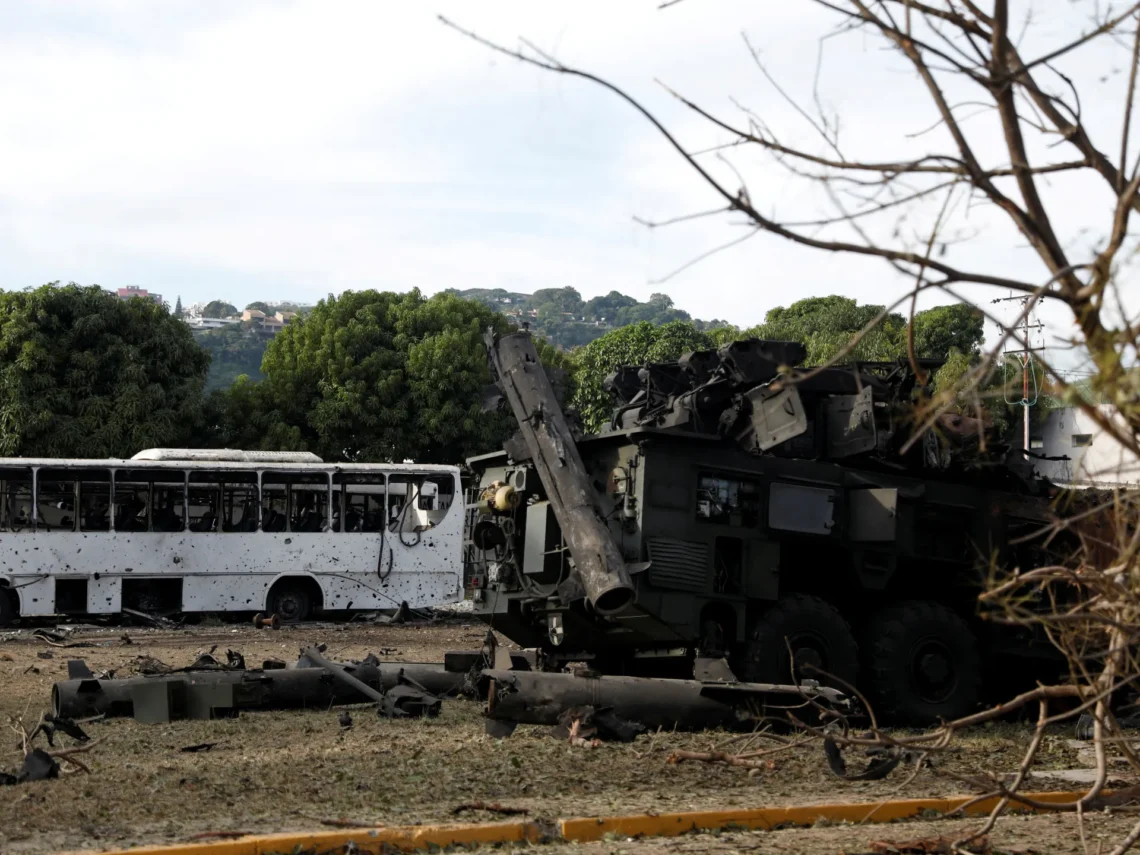
US attacked Venezuela on January 3, 2026. January 4, 2026 — In a watershed moment for Latin American geopolitics, Venezuelan President Nicolás Maduro was captured during a dramatic U.S. military operation in Caracas, sparking global debate, sending shockwaves across nations, and eliciting a deeply emotional response from Venezuelans both at home and abroad.
For decades, Venezuela has been mired in political unrest, economic collapse, and emigration on a historic scale. But nothing has tested the nation’s resilience like the events that unfolded over the weekend — a surprise military strike and the capture of its longstanding leader, Nicolás Maduro, followed by his removal to New York to face charges in a U.S. federal court. Reuters
This is the story of how a country stood stunned, how its people and leaders reacted, and what may lie ahead for Venezuela and the world.(US attacks Venezuela)
The Operation that Shook a Nation.(US attacks Venezuela)
In the predawn hours of January 3, 2026, U.S. forces launched a coordinated strike in Caracas. Within hours, Maduro had been captured and transported out of Venezuela, now formally in custody on U.S. soil. Reuters
President Donald Trump confirmed Maduro’s capture, stating that the United States would temporarily “run” Venezuela until a new transition could be secured. Trump framed this as necessary to curb corruption, drug trafficking, and to foster a democratic future for the Venezuelan people Venezuela was attacked by US . Reuters
The dramatic nature of the operation—and the unprecedented depth of U.S. military engagement within a Western Hemisphere nation—has ignited fierce debate. This spans capitals of power from Washington to Beijing, as well as the homes of millions of Venezuelans, both inside the country and in exile. (US attacks Venezuela)
The Man at the Center: Nicolás Maduro. (US attacks Venezuela)
For more than a decade, Nicolás Maduro has been at the center of Venezuela’s turbulent political landscape. A
Maduro, the successor to Hugo Chávez, led a government often accused of corruption, human rights abuses, and silencing dissent. Consequently, economic collapse forced millions to flee. However, to many Venezuelans and allied nations, he still stood as a symbol of resistance against foreign interference.
That perception changed dramatically when U.S. forces entered Caracas, captured him on home soil, and swiftly transported him to American custody. Since then, the world has watched in shock.
Now, Maduro faces federal charges in New York, accused of narcoterrorism and drug trafficking—allegations long pursued by U.S. prosecutors seeking accountability.
The sight of a once-powerful leader now appearing in custody — handcuffed and escorted by U.S. law enforcement — has become one of the defining images of the moment. Every broadcast, every headline, every social media post is framed around one question: What now?(US attacks Venezuela).
Loyalists Vow Defiance in Venezuela
US attacks Venezuela:
Global Reactions: Condemnation and Support
The international community has been split, reactionaries ranging from condemnation to praise — and everything in between.
Latin America: Division and Alarm
Many Latin American governments have condemned the U.S. operation and stressed respect for national sovereignty and international law. Leaders from Brazil, Colombia, Chile, and Mexico have publicly criticized what they view as a violation of international norms, calling for restraint and dialogue over force. Wikipedia
However, a contrasting voice came from Argentina’s President Javier Milei, who celebrated Maduro’s capture as a victory against corruption and narco-state rule. Catholic World Report
Europe: Legal Concerns and Diplomatic Calls
Across Europe, governments have echoed calls for adherence to international law. Spain’s Prime Minister strongly condemned the action, equating it to a breach of legal and sovereign norms. Global Banking | Finance
Global Powers: East and West
China, a key ally of the Maduro regime for years, slammed the U.S. action as a violation of international law and a threat to regional stability, warning of potential consequences. The Washington Post
Russia, too, demanded Maduro’s release and called for respect for Venezuela’s sovereignty, even as it criticized the U.S. tactical justification. Reuters
United Nations officials have expressed deep concern over the implications of unilateral force, warning that the precedent could destabilize international norms and embolden future conflicts. The Australian
The Venezuelan People: Hope, Fear, and Uncertainty
For ordinary Venezuelans, emotions are raw, complex, and deeply personal.
For those who fled economic collapse and political persecution, Maduro’s capture represents hope — hope for an end to repression, for stability, for a return home.
Many Venezuelans living abroad describe a visceral relief at seeing a symbol of an era marked by famine, violence, and broken promises removed from power. Yet even among hopeful voices, there is fear — fear of chaos, fear of retaliation, fear of international tension spiraling into wider instability. The Guardian
Inside Venezuela, the emotional landscape is even more volatile. Families separated by borders, torn by conflicting loyalties, now grapple with what this moment means for their future.
For some, Maduro’s fall is vindication after years of protest and resistance. For others, it’s a painful reminder of unresolved grievances and the human cost of political conflict.
Legal Battles and the U.S. Courtroom
Now in U.S. custody, Maduro faces unprecedented legal proceedings. The charges against him are rooted in years of investigations tied to alleged drug trafficking, corruption, and international crime.
A federal indictment unsealed in New York alleges Maduro coordinated criminal activity involving narcotics and related offenses, claims Maduro has long denied as politically motivated. Wikipedia
Maduro’s legal team plans to fight the charges aggressively. They will argue that he has diplomatic immunity and that U.S. courts lack the authority to prosecute a foreign head of state.
Legal experts around the world are watching closely. Every motion, appeal, and courtroom exchange could redefine how international justice works in politically charged cases. Governments are already analyzing each move, aware that these proceedings may set powerful precedents for future global disputes.
What This Means for U.S.–Latin America Relations
The U.S. decision to intervene so directly in Venezuela represents a seismic shift in diplomatic and military strategy.
For decades, the U.S. has used sanctions, diplomatic pressure, and economic incentives to influence Venezuela’s political trajectory. But the recent operation signals a new willingness to escalate to direct military engagement — a decision with profound implications for U.S.–Latin America relations.
Some analysts argue this may strengthen U.S. influence in the hemisphere. Others warn it could fuel anti-U.S. sentiment and backlash among nations wary of interventionist policies.
The ripple effects are already visible. Regional alliances are tightening in new configurations, with some countries distancing themselves from the United States while others cautiously reassess diplomatic alignments.
The Road Ahead: Transition, Turmoil, or Transformation?
As Venezuela stands at this crossroads, three pathways emerge:
1. Managed Political Transition
Under U.S. oversight, coordinated efforts could soon aim to organize elections, release political prisoners, and rebuild institutions; however, success depends on cooperation among Venezuelan factions.
2. Continued Instability
Without inclusive dialogue, the risk of fragmentation grows — factions pledging loyalty to different power centers could trigger renewed violence and humanitarian collapse.
3. Regional Diplomatic Resolution
International negotiations involving the UN, OAS, and key global powers could offer a diplomatic exit, balancing sovereignty with accountability.
Each path carries risks and hopes. What remains clear is that Venezuela’s future now hinges on fragile diplomacy, steadfast leadership — and the collective will of its people.
Continue here: https://xtraprofit.com/
https://xtraprofit.com/personal-finance
https://xtraprofit.com/investing-the-stock-market/
US attacks Venezuela US attacks Venezuela US attacks Venezuela US attacks Venezuela US attacks Venezuela: US attacks Venezuela: