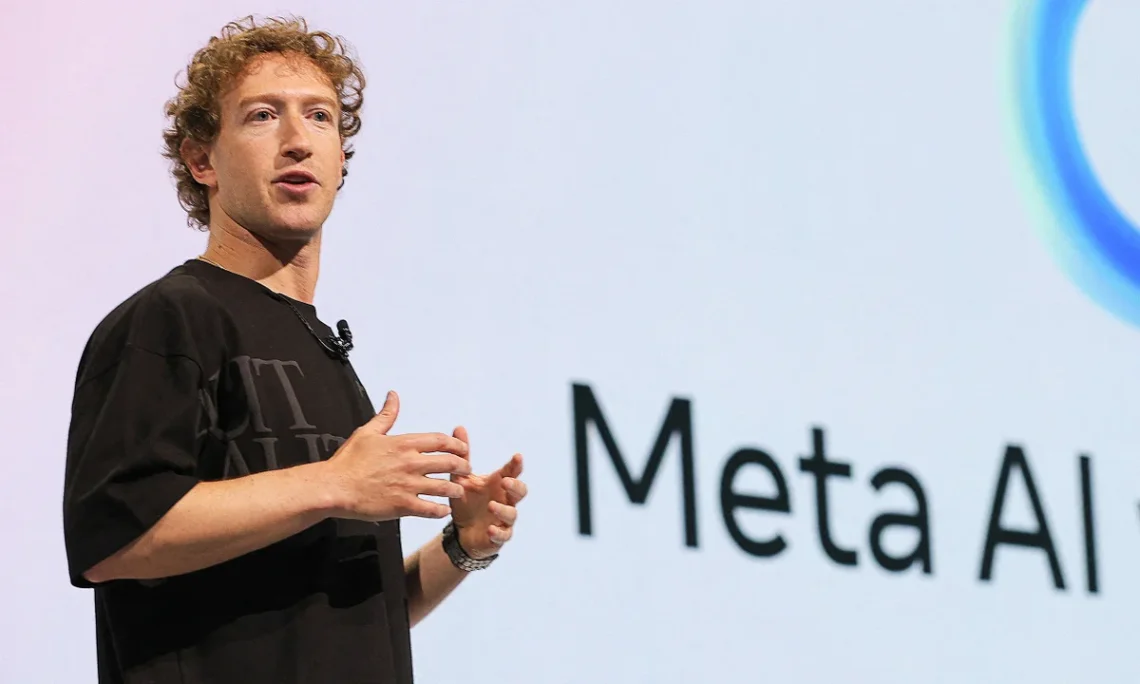
The stock reaction was positive after Meta announced a 30% budget cut to Reality Labs, signaling a strategic pivot toward AI and smart wearables in 2026.
The biggest strategic reversal in modern tech history is underway. Meta Platforms is reportedly preparing to execute a major cutback in its ambitious, yet costly, Metaverse division, Reality Labs. This isn’t a minor cost-saving measure; it’s a dramatic 30% budget reduction that is widely interpreted as CEO Mark Zuckerberg finally acknowledging that the era of the “blank check” for virtual reality is over.
The shift is clear: every dollar saved from the slow-moving Quest headset and Horizon Worlds projects is being funneled into the arms race for Artificial Intelligence. For investors, this pragmatic pivot offers immediate relief. For employees in the Reality Labs division, it signals the stark reality of potential layoffs beginning as early as January 2026.
The Numbers That Forced the Change: $70 Billion in Losses
The decision to cut the Reality Labs budget by up to $30\%$ was not made lightly, but it was financially inevitable. Since Meta’s high-profile rebranding in 2021, the division dedicated to building the metaverse has hemorrhaged capital, accumulating over $70$ billion in cumulative losses.
This immense burn rate—which exceeded $4$ billion per quarter in 2025—had become impossible for the company to justify to Wall Street. While Zuckerberg argued the metaverse was a long-term, decades-long bet, the market was demanding immediate, commercially viable returns. The cutbacks are the clearest sign yet that Meta is choosing commercial reality over speculative fantasy.
Why Investors Cheered the Cuts
News of the potential budget slash drew a remarkably strong response, adding tens of billions of dollars to Meta’s market capitalization overnight. Investors have long been critics of the company’s dual strategy, viewing the metaverse as a costly distraction from its highly profitable core advertising business.
-
Risk Mitigation: The reduction minimizes the financial “leaky bucket” risk associated with Reality Labs.
-
Focus on Profitability: It shows management is prioritizing capital discipline and allocating funds to areas like AI that can enhance the existing, revenue-generating Family of Apps (Facebook, Instagram, WhatsApp) almost immediately.
The New War: Funding the Superintelligence Labs
The budget cuts are merely the first half of the story; the second half is the massive, aggressive spending on AI. The funds reallocated from the metaverse are set to fuel Meta’s entry into what some sources call the “Superintelligence Labs” division.
Meta is investing heavily in:
-
AI Infrastructure: Committing hundreds of billions of dollars to build massive data centers and AI superclusters (like the rumored “Prometheus” facility) to develop and train the next generation of large language models (LLMs).
-
Generative AI Integration: The immediate goal is to weave generative AI features—from complex chatbots to creative tools—directly into the platforms used by billions, creating new monetization opportunities and user engagement.
The Pivot to Wearables: From Quest to Smart Glasses
The most telling sign of the shift is in hardware development. While the Quest headset line is facing significant budget reductions and is struggling to move beyond a niche gaming/enthusiast market, a different product is receiving the spotlight: AI-powered wearables.
The Ray-Ban smart glasses have been a surprise success story, serving as the perfect “eyes and ears” for Meta’s AI assistant. By integrating vision and language models directly into a socially acceptable, consumer-friendly form factor, Meta is pursuing the “Post-Smartphone” era through a gradual, practical approach. This explains the recent high-profile hiring of a prominent design leader from Apple—a clear signal that the future is about sleek, AI-driven devices worn on the face, not bulky VR gear.
The Future of the Metaverse: A Long-Term Reassessment
Does this mean the metaverse dream is dead? Not entirely. CEO Zuckerberg still believes that virtual environments and avatars will eventually serve as a critical surface area for future AI systems to interact with users.
However, the Reality Labs cutbacks signal a decisive reassessment of the timeline and the budget. The long-term, speculative platform building is pausing. Development will now focus on:
-
ROI-Driven Projects: Prioritizing projects that show a clear path to consumer adoption and revenue.
-
AI-Enhanced XR: Using AI to fix the technical limitations of VR/AR, such as spatial recognition and creating more realistic avatars and environments.
For developers and employees working on Horizon Worlds and Quest, the shift is a sobering reality check. But for Meta as a whole, it represents a crucial strategic realignment—shedding an expensive distraction to focus on the trillion-dollar technology that promises immediate competitive advantage: Artificial Intelligence.
Read more News : xtraprofit
External links : CNBC