The gap is widening’: inside Donald Trump’s K-shaped economy
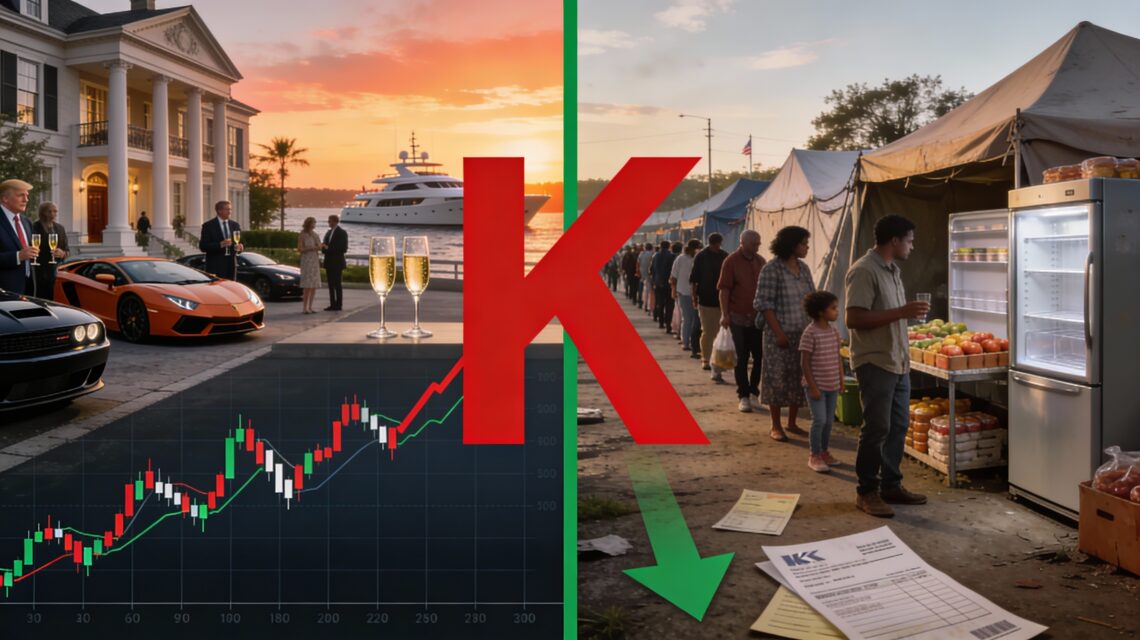
The gap between America’s rich and poor is growing bigger under President Donald Trump. His economy looks like the letter “K,” where the top shoots up while the bottom falls down. This split hurts everyday folks and sparks big debates across the nation.
What Is a K-Shaped Economy?
Picture the letter K drawn on a graph. One line shoots straight up to the sky. That stands for the wealthy folks who own stocks, homes, and businesses. Their wealth grows fast as markets boom. The other line slopes down sharp. That shows working families who face higher bills, lost jobs, and tight budgets. They fall behind more each month.
This K shape took hold after the pandemic shook everything up. But in Trump’s second term, it widened fast. Stock markets hit record highs. The S&P 500 climbed over 20 percent in the past year alone. Tech giants like those in the “Magnificent Seven” led the charge. Their profits soared on AI hype and strong sales. Home prices in rich spots like Greenwich, Connecticut, jumped to $3.5 million on average. Luxury cars and private jets sell out quick.
On the flip side, food pantries in places like Bridgeport see lines double. Working parents skip meals to feed kids. Rent eats half their paychecks. This divide isn’t new. But Trump’s policies sped it up. Tax cuts gave big breaks to top earners. Tariffs hit imports hard, raising costs for basics. The result? A nation split in two, with winners at the top and strugglers below.
Experts call it the starkest gap since the Great Depression. Data from the Census Bureau shows the top 10 percent hold 70 percent of all wealth now. The bottom 50 percent scrape by with just 2 percent. Trump’s team cheers the growth numbers. GDP rose 4.3 percent last quarter. But that growth skips most homes. Consumer spending holds up on credit cards, not real wage gains.
Trump’s Big Beautiful Bill Hurts the Bottom
Back in July, Trump signed his “Big Beautiful Bill.” It slashed taxes for millionaires. The top 10 percent got $12,000 more in their pockets each year. Sounds great for them. But the bottom 10 percent lost $1,600. Cuts to Medicaid and food stamps hit hard. Families now choose between rent and medicine. Or groceries and gas.
Take Bridgeport, Connecticut. Soup kitchens there serve 200 to 250 people a day. That’s up from 125 just four years back. New faces show up. Not just the jobless. Working folks too. Single moms with two kids. Construction workers laid off from slow projects. Homeless tents pop up under bridges. “We see more tents every week,” says one shelter boss.
Trump blames high prices on Biden’s “con job.” He says inflation is crushed. But polls tell a different story. Eight in ten voters worry about costs first. Groceries cost 25 percent more than pre-pandemic. Eggs hit $5 a dozen. Gas hovers near $4 a gallon in many states. Unemployment ticks up to 4.2 percent. Hiring slows in retail and factories. Trump’s tariffs on China and Mexico jack up prices on clothes, toys, and cars. A basic pickup truck now tops $40,000.
Midterms loom large. Republicans sweat as voters rage. In swing states like Pennsylvania and Michigan, factory towns hurt bad. Plants close from cheap foreign steel floods before tariffs. Now costs rise without jobs back yet. The K widens as pain grows.
Wealth Booms for the Top 10 Percent
Life shines for top earners. They make over $180,000 a year. Many live on coasts in tech hubs or finance centers. New York, San Francisco, Austin. Jobs pay fat salaries. Bonuses flow free. Assets like stocks and real estate pump their net worth.
Markets love Trump. Deregulation frees banks to lend big. Energy firms drill more with fewer rules. Oil hits $80 a barrel. Profits roll in. Greenwich, Connecticut, buzzes with Lamborghinis and yacht clubs. Private beaches host star-studded parties. Home values up 15 percent yearly. Data centers for AI sprout everywhere. Nvidia and pals see shares triple.
Consumer sentiment splits wild. Stock owners rate the economy at 80 out of 100. Highest in years. Non-owners hit 50. Lowest since 1998. Trump’s policies fuel this. Corporate tax cuts from his first term stick. New ones add more. The rich invest in booming sectors. AI, crypto, green tech twists. They ride the up line of the K high.
But critics warn. This top-heavy growth hides risks. If markets dip, the whole K could crash. Wealth stays in enclaves. Trickle-down? Not much reaches main street.
The Bottom Line Feels the Squeeze
Lower rungs bear the brunt. Living standards drop for millions. Shelters overflow nationwide. Not just with chronic poor. Working families join the lines. In Ohio rust belt towns, evictions spike 30 percent. Inflation chews wages. Real pay growth sits at 1 percent for most. Below cost rises.
Home ownership dreams fade. Sales slump 20 percent as rates hold at 6.5 percent. Young buyers priced out forever. Student debt tops $1.7 trillion. Payments restart full force. Many delay families or weddings.
Food insecurity hits 15 percent of homes. Up from 10 percent pre-Trump. Pantries ration cans. Kids go hungry in school lunch gaps. Health suffers too. Medicaid cuts mean fewer doctor visits. Diabetes and heart issues climb unchecked.
Unemployment hides true pain. Many quit looking. Labor force shrinks. Gig jobs pay peanuts. Uber drivers net $10 an hour after gas. Downward line of K steepens. Voter anger boils. Polls show economy tops worries for 60 percent. Trump’s approval dips there.
Real Stories from the Split
Stories bring the K to life. Meet Juan Cardona in Bridgeport. He lives in a tent city. Lost his warehouse job to automation. “The only way is up,” he says with grit. But up feels far. Chef Kelemen at the soup kitchen stretches meals. Serves extra plates to new working poor. “They come ashamed but hungry,” she notes.
In Greenwich, David Rabin watches from his mansion. “The gap is widening,” he admits. Local leaders tout wealth gains. Ignore hunger ten miles away. Mark Abraham studies trends. Rich towns thrive on finance. Poor ones sink on services.
Reddit buzzes with tales. Users call $180k “upper class” in cheap states. But minimum wage sticks at $7.25 federal. “Upper class” pays rent there. A mom in Florida shares: Works two jobs. Still can’t buy school supplies. Dad in Texas: Factory shut. Tariffs didn’t save it. Now drives for DoorDash.
These voices echo nationwide. From LA tent cities to Detroit blocks. Human cost of K grows daily.
Why the K Keeps Growing
Roots run deep. Tax codes favor assets over work. Capital gains tax at 20 percent. Wages hit 37 percent top. Rich own assets. Poor trade time for pay. Trump’s bill doubles down. More cuts for investors.
Tech shifts jobs. AI eats routine tasks. Coders and clerks first. Manufacturing lags despite promises. Tariffs spark trade wars. China hits back on soy and pork. Farmers hurt. Budget plans cut rates more. Sparks inflation fears. Fed holds steady. Markets jitter.
Global trends add fuel. Post-pandemic supply chains snap. Wars hike energy. Rich hedge with gold and bonds. Poor pay pump prices direct.
Experts like those at Policy Center question sustainability. Top growth masks bottom rot. If consumer spending cracks—80 percent of GDP—recession looms. Tax refunds might juice next year. But debt piles at $36 trillion.
Trump’s Defense and Voter Backlash
Trump fights back hard. Touts 4.3 percent GDP. “Best ever,” he posts on Truth Social. Blames Biden for inflation start. Claims tariffs crush it long-term. Eyes new Fed chair for rate cuts. If stocks stay hot, pressure mounts.
Stock owners cheer. But polls sting. Gallup shows 35 percent approve economy. Down from 45 at inauguration. Most say worse off. Prices top beefs.
Republicans fret midterms. House flips possible. Senate tight. K-shape branded “new stagflation.” Unequal pain, no growth for all. Sustainability doubts rise. Wealth pyramid teeters.
Voters demand fixes. Affordability now. Not promises later.
Impacts on Key Sectors
Housing Market Split
Luxury homes fly off shelves. Median in rich zip codes: $2 million. Starter homes sit. Prices up 10 percent, sales down 15 percent. Builders chase mansions. Ignore affordable units.
Job Markets Divide
Tech and finance add 500,000 jobs. High pay, college needed. Retail and manufacturing cut 200,000. Low skills hit hard. Gig economy fills gaps. Unstable pay.
Retail and Spending
Rich splurge on Gucci and Tesla. Poor hunt sales at Walmart. Overall spending up 3 percent. But on debt. Credit card balances record $1.1 trillion.
Health and Education
Medicaid rolls drop 5 million. ER visits climb. College costs soar. Enrollment dips for low-income kids.
Global Ripples from US K
World watches America’s split. Europe faces own K from energy shocks. China grows steady but exports hurt by tariffs. Emerging markets eye US consumer drop. If bottom spends less, global trade slows.
Trump’s “America First” boosts exports short-term. Up 5 percent. But retaliation bites. Investors flee to safer bets.
Paths to Fix the Divide
Solutions start with wages. Raise minimum to $15 phased. Train workers for AI jobs. Tax reform: Close loopholes for ultra-rich. Fund via broad base.
Build 2 million affordable homes. Cut regs smart. Boost child tax credits. Help families direct.
Trump’s team eyes price controls light. Dereg more energy. But balance needed. Lift boats, not just yachts.
Voters push change. History shows divides spark shifts. New Deal fixed 1930s K. Today? Watch midterms.
Experts urge action. “Sustainable growth shares pain,” says one analyst. Policies must bridge the K. Or risks mount.
Quick Comparison Table
| Group | Wealth Change | Key Wins | Key Losses |
|---|---|---|---|
| Top 10% | +15% yearly | Stocks up, tax cuts | Minor tariffs |
| Bottom 50% | -2% real | Some job adds | Inflation, cuts |
https://xtraprofit.com/investing-the-stock-market/
https://xtraprofit.com/personal-finance
https://xtraprofit.com/real-estate-mortgage/
K-Shaped Economy
K-shaped economy K-shaped economy K-shaped economy K-shaped economy K-shaped economy K-shaped economy K-shaped economy K-shaped economy K-shaped economy








5 Comments on “K-Shaped Economy The gap is widening’: inside Donald Trump’s Shocking 2025”